

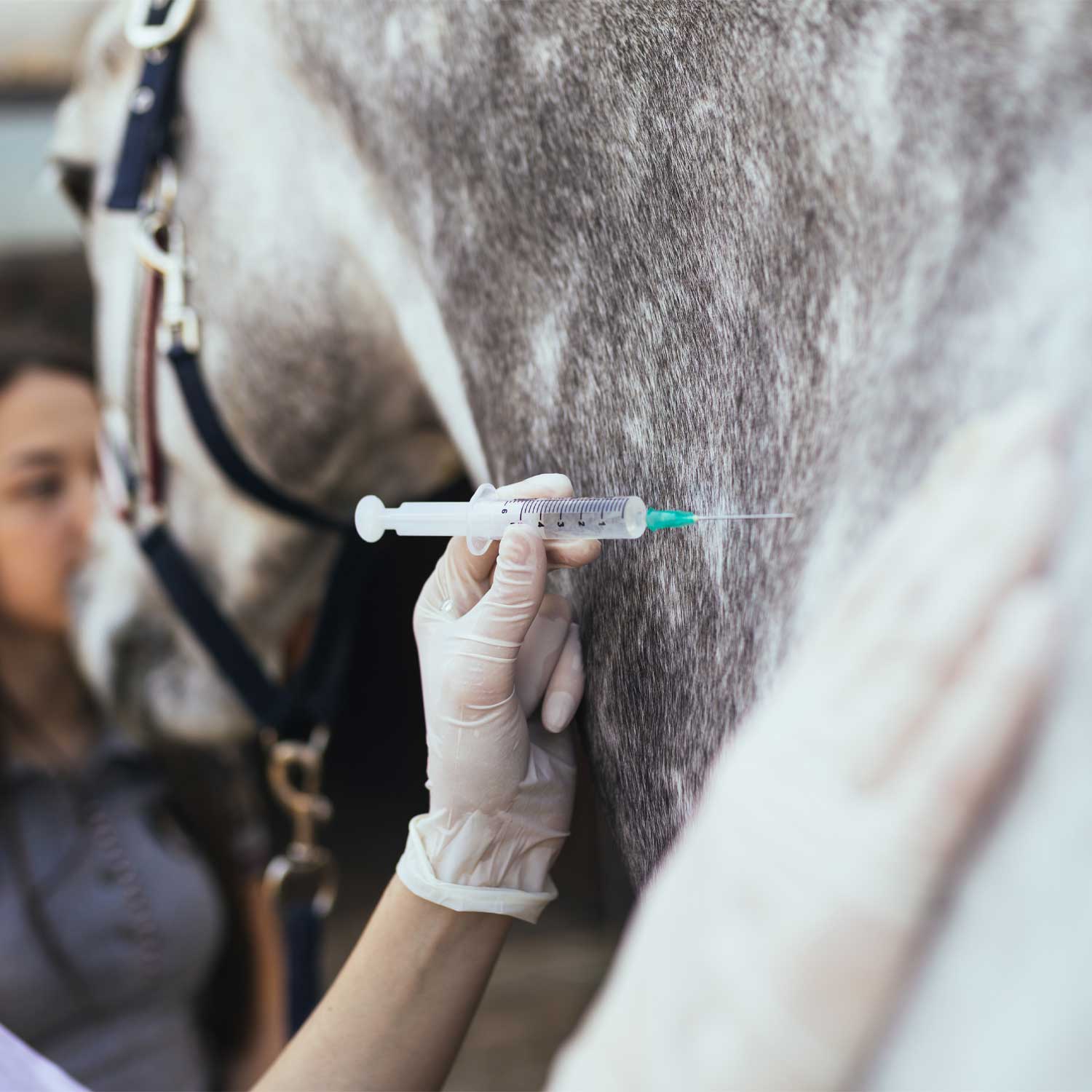
The core vaccines for horses protect against diseases that pose serious health risks, are prevalent in most regions, and can be fatal if contracted. These vaccines include rabies, tetanus, Eastern and Western equine encephalomyelitis, and West Nile virus. At Signature Equine Hospital, we recommend all horses receive these foundational vaccines annually to maintain immunity and prevent outbreaks.
Understanding Core Vaccines for Your Horse
Core vaccines represent the foundation of your horse’s preventive health care. These aren’t optional. They address diseases with high mortality rates or significant public health concerns.
The American Association of Equine Practitioners (AAEP) designates certain vaccines as “core” based on disease severity, transmission risk, and geographic distribution. Every horse should receive these regardless of age, location, or use. Risk-based vaccines, on the other hand, depend on exposure factors like travel, boarding facilities, and local disease outbreaks.
Equine Influenza & Rhinopneumonitis (Flu-Rhino)
Respiratory infections spread rapidly through horse populations. Flu causes fever, coughing, and nasal discharge that can sideline horses for weeks. Flu-Rhino, caused by equine herpesvirus, triggers similar respiratory signs but also poses abortion risks in pregnant mares and neurological disease.
Horses in training facilities, on show circuits, or in frequent contact with new horses face greater exposure. The virus transmits through coughing, shared water buckets, and contaminated equipment. Even horses that recover can shed the virus and infect others.
Eastern and Western Encephalomyelitis
These mosquito-borne viruses attack the central nervous system. Eastern equine encephalomyelitis carries a 75-90% fatality rate in infected horses. Western equine encephalomyelitis is slightly less deadly but still catastrophic.
Infected horses develop fever, depression, and neurological signs like stumbling, circling, or paralysis. There’s no cure once these symptoms appear; all we can offer is supportive care. Prevention through vaccination is critical, especially in Texas, where mosquito populations thrive year-round.
Rabies
Rabies is 100% fatal once clinical signs develop. The virus spreads through saliva, typically via bites from wildlife. Horses encounter rabid raccoons, skunks, and bats more often than we’d like to think, particularly in rural areas.
Early signs mimic colic or choke. As the disease progresses, horses become aggressive, hypersensitive to sound and light, or paralyzed. Because rabies threatens human health, vaccination protects not just your horse but everyone who handles them.
West Nile Virus
Since its arrival in the United States in 1999, West Nile virus has infected thousands of horses. Mosquitoes carry the virus from infected birds to horses. About one-third of infected horses die, and survivors often have permanent neurological damage.
Clinical signs include weakness, stumbling, partial paralysis, and muscle twitching. Horses can’t spread the virus to other horses or humans, but vaccination remains essential because treatment options are limited.
Tetanus
Tetanus bacteria live in soil, manure, and dust. They enter through wounds, even tiny punctures we might not notice. The bacteria produce toxins that cause severe muscle stiffness, spasms, and death in 80% of unvaccinated horses.
Horses are among the most susceptible species to tetanus. Their environment guarantees exposure. A single vaccine dose provides years of immunity, making this one of the most cost-effective preventive measures we have.
Texas Core Vaccines: What We Recommend and Why
At Signature Equine Hospital, we tailor vaccination protocols to Texas-specific risks. Our state’s warm climate, abundant mosquito populations, and wildlife activity create unique challenges.
We typically administer a “trio” of vaccines that form the backbone of protection for Texas horses. This approach streamlines scheduling while ensuring coverage against the most pressing regional threats.
Flu-Rhino (Rhinopneumonitis)
Texas horse operations see constant movement. Horses travel to shows, clinics, and breeding facilities year-round. This mobility makes respiratory disease prevention crucial. We recommend flu-rhino vaccines every six months for horses in active work or frequent contact with other horses.
Young horses and those with heavy competition schedules benefit from more frequent boosters. The vaccine doesn’t prevent infection entirely, but it dramatically reduces disease severity and viral shedding.
Eastern and Western Encephalomyelitis
Our mosquito season stretches longer than in northern states. Some years, we see mosquito activity nearly year-round. This extended exposure window makes encephalomyelitis vaccines particularly important in Texas.
The vaccine is highly effective. Properly vaccinated horses rarely contract these diseases. Given the high fatality rate and lack of treatment, this protection offers invaluable peace of mind.
Rabies
Texas wildlife carries rabies consistently. Bats, the most common rabies vector in our area, can easily access barns and pastures. A single annual rabies vaccine provides solid protection against this invariably fatal disease.
Some horse owners underestimate rabies risk, but we’ve seen cases. Prevention costs far less than the emotional and financial toll of a rabies exposure or infection.
When Should Your Horse Get Vaccinated?
Timing matters. Strategic scheduling ensures peak immunity during high-risk periods.
Vaccines Done Annually
Most core vaccines require annual boosters. Rabies and tetanus fall into this category. We can administer these at any time of year, though many owners choose spring to align with routine wellness visits.
Spring Vaccination Timing
The Texas core vaccines are usually administered in the spring. Spring boosters prepare horses for mosquito season. We recommend completing encephalomyelitis and West Nile vaccines by April or early May, before mosquito populations peak. This timing ensures maximum antibody levels when exposure risk climbs.
Spring also marks the start of show season for many horses. Updated flu-rhino vaccines before the travel season begins help prevent respiratory outbreaks at events.
Fall Boosters
Fall represents the second window for encephalomyelitis and West Nile boosters, particularly in Texas, where mosquitoes remain active into November. Some veterinarians recommend vaccinating every 6 months to maintain strong immunity.
Fall is also our recommended time for flu-rhino boosters before winter training programs and the covered arena season, when respiratory disease spreads easily in enclosed spaces.
Understanding Booster Requirements
The initial vaccination series differs from annual boosters. Previously unvaccinated horses need multiple doses spaced weeks apart to build immunity. Foals require a carefully timed series that accounts for maternal antibodies.
Adult horses receiving annual boosters maintain immunity with single doses. We track your horse’s vaccination history to ensure proper protocols.
Additional Considerations for Your Horse’s Vaccine Protocol
Beyond core vaccines, regional factors and your horse’s lifestyle influence protection needs.
Ask Your Veterinarian About Regional and Seasonal Vaccines
Texas spans multiple climate zones and disease patterns. What’s essential in East Texas may differ from what’s essential in West Texas. We evaluate your property location, local disease outbreaks, and seasonal risks to customize protocols.
Some years bring disease surges. Veterinarians monitor state and county health data to identify emerging threats and adjust recommendations accordingly.
Strangles Vaccination Options
We compound a strangles vaccine here at Signature Equine, though it isn’t part of our standard trio. Strangles causes painful lymph node abscesses and a highly contagious respiratory disease. The decision to vaccinate depends on your facility’s biosecurity and exposure history.
Horses at boarding barns, training facilities, or frequent show attendance face a higher risk of strangles. We discuss your specific situation to determine whether strangles vaccination makes sense for your horse.
Travel and Event Requirements
Many states, competitions, and breeding facilities mandate specific vaccines or even particular vaccine brands. Coggins tests aren’t the only paperwork you need. Some venues require proof of flu-rhino vaccination within six months, rabies within twelve months, or EEE/WEE within six months.
Plan ahead. Vaccines need time to generate immunity. Last-minute scrambling before a show or interstate move creates stress and may not provide adequate protection. We help you navigate these requirements and maintain compliant health certificates.
Protecting Your Horse’s Health Through Smart Vaccination
Equine vaccinations represent one of the most effective tools we have to prevent devastating diseases. Core vaccines protect against threats that could end your horse’s life or leave permanent damage. They’re not expensive compared to treating the diseases they prevent.
Texas horses face unique challenges. Our climate and geography create year-round disease risks that demand consistent protection. Working with your veterinarian to establish and maintain an appropriate vaccine schedule gives your horse the best chance at a long, healthy life.
Schedule Your Horse’s Vaccines with Signature Equine Hospital
At Signature Equine, we’re here to help you navigate your horse’s health care needs. Whether you’re establishing a vaccination program for a new horse, updating annual boosters, or have questions about regional requirements, our team provides personalized guidance based on your horse’s individual circumstances. Contact Signature Equine Hospital today to schedule a wellness visit or discuss your horse’s vaccination needs. We’re committed to keeping Texas horses healthy and protected.